
Is Solar Still Worth It in Victoria With Low Feed-In Tariffs? (Realistic Savings Breakdown)

Updated: Apr 24
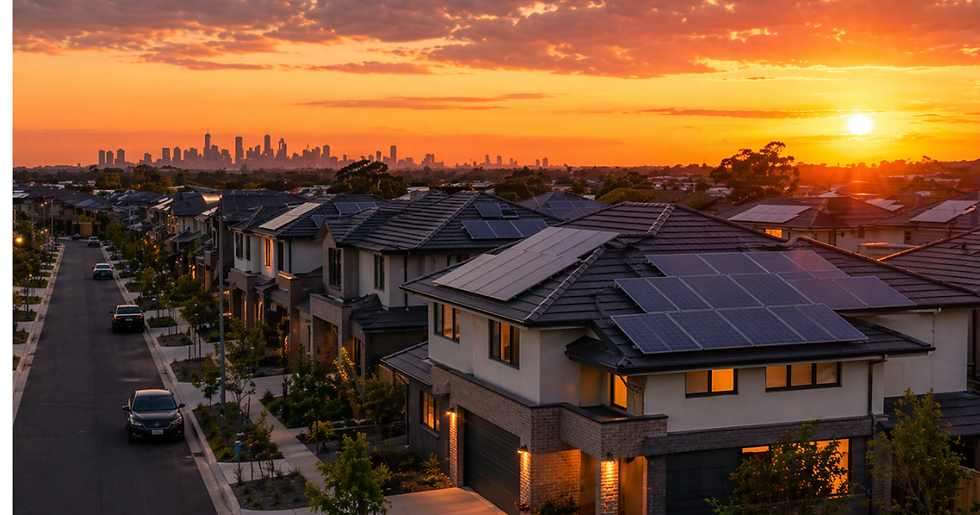
Solar feed-in tariffs in Victoria have reduced significantly over the past several years. Because of this change, many homeowners and businesses are understandably asking whether installing solar still makes financial sense. Naturally, the most common question we hear is: Is solar worth it for Victoria residents today?
If you live in Melbourne or regional Victoria, this guide will provide a clear and realistic answer. We’ll examine current solar feed-in-tariff rates, break down detailed solar ROI Melbourne calculations, and explain where the real financial value now comes from. Most importantly, you’ll learn practical strategies to maximise returns even with lower export payments.
The short answer? Yes, solar is still worth it — but only if it is designed properly.
Key Takeaways
Solar remains financially strong in Victoria when systems are optimised for self-consumption, especially with the rapid increases in power prices.
Most savings now come from reducing grid purchases, not exporting energy.
The average solar ROI for Melbourne homeowners is 3–5 years.
Strategic system sizing, energy habits, and battery options significantly increase returns.
Table of Contents
What Happened to Solar Feed-In Tariffs in Victoria?
Over the past decade, the solar feed-in tariff rate in Victoria has gradually declined. Years ago, premium feed-in schemes offered payments exceeding 40 cents per kWh. However, those legacy programs have now ended.
According to Solar Victoria and the Essential Services Commission, current minimum feed-in tariffs typically range between 3c and 7c per kWh, depending on your electricity retailer and export time.
Why Did Feed-In Tariffs Drop?
Several key factors contributed:
Rapid growth of rooftop solar across Victoria
Lower wholesale electricity prices during peak solar generation hours
Grid saturation during midday exports
Because thousands of households export energy simultaneously, wholesale daytime electricity prices fall. Consequently, retailers pay less for exported energy.
However, while export payments have dropped, electricity purchase rates remain significantly higher.
This difference is the key to understanding modern solar economics.
Is Solar Worth it for Victorian Homeowners in 2026?
The answer remains yes — but strategy matters more than ever.
Previously, systems were often oversized to maximise exports. Today, smart system design focuses on maximising self-consumption instead.
Why Self-Consumption Matters
Let’s compare rates:
Buying electricity from the grid: 25–40 cents per kWh
Selling electricity via feed-in tariff: 3–7 cents per kWh
This means using your own solar energy saves you up to six times more than exporting it.
Therefore, the smarter question is not just “Is solar worth it in Victoria?”Instead, ask: “How much of my solar energy can I use myself?”
Solar Becomes Highly Valuable if You:
Work from home
Run appliances during daylight hours
Charge an electric vehicle
Operate air conditioning or electric heating regularly
Plan to install a battery to optimise nighttime usage
For many Melbourne households, daytime electricity usage has increased since remote work became common. As a result, solar systems now offset a larger portion of purchased electricity.
Real Solar ROI Melbourne: Full Financial Breakdown
Let’s examine realistic numbers for a standard Melbourne household.
Example: 6.6kW Residential Solar System without batteries
Installed cost after rebates: $5,500
Annual energy production: 8,000–9,000 kWh
Average household usage: 6,000–8,000 kWh annually
For this example, assume:
System cost: $6,000
Annual production: 8,500 kWh
Self-consumption rate: 60%
Retail electricity rate: 30c per kWh
Feed-in tariff: 5c per kWh
Energy Allocation
5,100 kWh used within the home
3,400 kWh exported to the grid
Annual Savings Breakdown
Self-consumed savings:5,100 kWh × 30c = $1,530
Export earnings:3,400 kWh × 5c = $170
Total annual financial benefit: approximately $1,700
Return on Investment (ROI)
System cost: $6,000
Annual savings: $1,700 (this doesn’t include the rising costs of electricity prices year on year)
Estimated payback period: 3.5 years
After this point, your system continues generating savings for 20+ years.
Even if electricity prices fluctuate, the long-term return remains attractive.
The annual savings usually increase when a battery is added.
This is why, despite lower feed-in tariffs, the answer to the question of whether solar is worth it in Victoria remains strongly positive.
The Self-Consumption Strategy Explained
Because exports are less valuable, maximising self-consumption is now essential.
Practical Ways to Increase Self-Consumption
Run major appliances during solar production hours.
Install smart timers for pool pumps, dryers, and hot water systems.
Charge electric vehicles during the day.
Use programmable washing machines and dishwashers.
Even small changes can improve savings by several hundred dollars per year.
Smart Metering & Monitoring
Modern inverters provide app-based monitoring. This allows you to:
Track generation
Monitor usage
Identify peak export times
Adjust habits accordingly
Energy awareness increases returns.
Battery Storage: Does It Improve Solar ROI Melbourne?
A common follow-up question is whether batteries improve financial returns.
How Batteries Help
A battery stores excess solar energy instead of exporting it cheaply. This allows you to use stored power at night, when grid electricity is more expensive.
However, Consider the Costs
Typical battery installation: $8,000–$14,000
Payback period: often 8–12 years
For high-usage households, batteries improve independence and resilience. However, purely from a financial perspective, they may not always shorten ROI dramatically. However, with the new battery rebate reducing the upfront costs, and the increase in power prices, the Return on investment is often shorter.
Some people also choose to have energy storage for backup in a power outage. Losing power can be costly to businesses and homeowners working from home.
Learn more about battery installation.
A professional system assessment determines whether battery storage suits your situation.
Common Mistakes That Reduce Solar Returns
Even though solar remains financially strong, mistakes can significantly reduce ROI.
1. Choosing the Cheapest Quote
Lower-cost systems often include inferior components. These may degrade faster and produce less energy over time.
In Victoria, some rebates are only available to your property once. If you use the rebate on inferior products that then break down or degrade, you can’t use the rebate on a replacement system.
2. Ignoring Roof Orientation and Shading
North-facing roofs perform best. However, east and west-facing systems can also provide excellent performance.
Small shading from trees or nearby structures can reduce output.
Good solar system design is as important as good components, good workmanship, and service.
3. Oversizing for Export
Oversizing a system purely for export reduces financial efficiency. Proper sizing aligns production with usage.
To find out what size system is right for you, look at the average daily kiloWatt hours on your electricity bill and divide that by the average peak sunlight hours in Melbourne (the average peak sunlight hours in Melbourne is 3). This will tell you what size system you need to meet your usage requirements.
4. Not Comparing Electricity Retail Plans
Different retailers offer different time-of-use structures and feed-in rates.
Compare plans at Energy Made Easy:https://www.energymadeeasy.gov.au/
Sometimes, switching retailers improves ROI.
Expected Results & Installation Timeline
Understanding realistic expectations prevents disappointment.
Typical Timeline
Site assessment & design: 1–3 days
Installation: 1 - 2 days for residential systems
Grid connection and approval: 1–3 weeks
Most homeowners see noticeable bill reductions in their first full billing cycle.
In addition, solar monitoring apps allow you to see immediate generation benefits.
FAQs About Solar in Victoria
Is solar worth it in Victoria with a 5c feed-in tariff?
Yes. Most financial benefit comes from avoiding grid purchases rather than exporting energy.
What is the current solar feed-in tariff rate in Victoria?
Most retailers offer between 3c and 7c per kWh.
What is the average solar ROI Melbourne homeowners achieve?
Most residential systems achieve payback within 3–5 years.
Are rebates still available?
Yes. Federal STCs and Victorian programs help reduce upfront installation costs.
Why Choose Energy Wired?
At Energy Wired, we design systems specifically for modern tariff conditions. Instead of overselling export income, we focus on real self-consumption optimisation.
With extensive experience across Melbourne and Victoria, we provide:
SAA-accredited installers
Top-quality panels and inverters
Detailed shading analysis
Transparent ROI projections
Ongoing support and monitoring assistance
If you are asking if solar is worth it in Victoria, we will provide a personalised breakdown based on your roof, usage patterns, and long-term goals.
👉 Request your free solar quote today.
Conclusion
Although feed-in tariffs are lower than they once were, solar remains one of the most reliable long-term investments available to Victorian homeowners.
The difference today lies in strategy. Systems must be designed around self-consumption, correct sizing, and quality components.
When properly installed, most Melbourne systems achieve payback within five years and deliver decades of savings thereafter.
If you would like a personalised solar ROI Melbourne calculation for your property, speak with the Energy Wired team today.
Let’s design yours the right way.

About the Author:
Clifford Wigg is an Accredited Solar Designer and Installer with 15 years of experience in the solar industry and 24 years of experience in the electrical field. He is accredited in the design and installation of grid-connected photovoltaic (PV) systems, battery storage systems, and standalone (off-grid) power systems.
As the owner of Energy Wired, Cliff leads a team of highly trained electricians delivering high-quality workmanship across Victoria. Energy Wired specialises in customised system design, premium products, and long-term value for every customer.


Comments